
 Acupuncture treatment intimidates many people who’ve never tried it. You’ve heard it works for pain, stress, and dozens of other conditions. But the thought of needles makes you nervous. You’re not sure what happens during an appointment or whether it will hurt.
Walking into Dr. Justin Swanson’s office at Austin Chiropractic & Acupuncture for your first acupuncture session will likely be different than you expect. Most patients are surprised by how relaxing the experience is. Many fall asleep during treatment. The needles are thinner than a strand of hair, and insertion feels nothing like getting a shot.
Knowing what to expect before your first visit helps you feel more comfortable and get better results from treatment. Here’s exactly what happens from the moment you schedule your appointment until you leave feeling more relaxed than when you arrived.
Should You Do Anything Special Before Your First Acupuncture Treatment?
You should eat a light meal 1-2 hours before your first acupuncture treatment, wear loose comfortable clothing that allows access to your arms and legs, avoid alcohol or heavy meals right before your appointment, and arrive a few minutes early to complete paperwork without feeling rushed. Coming to treatment well-hydrated and relatively relaxed helps your body respond better.
Don’t come on an empty stomach. Low blood sugar can make you feel lightheaded during or after treatment. A small meal or snack beforehand prevents this. But don’t eat a huge meal right before either—you’ll be lying down for 20-30 minutes and a full stomach can feel uncomfortable.
Clothing matters more than you might think. Dr. Swanson needs access to common acupuncture points on your lower legs, forearms, upper back, and sometimes your abdomen. Wear pants that roll up easily past your knees or shorts. A loose shirt or tank top works better than something tight and restrictive. You won’t need to fully undress.
Skip the alcohol before treatment. It can interfere with how your body responds to acupuncture. Same with caffeine if you’re being treated for anxiety or sleep issues—though a normal amount of morning coffee is fine for afternoon appointments.
Bring a list of any medications you’re taking and information about your main health concerns. The more Dr. Swanson knows about your overall health, the better he can customize your treatment. Write down your symptoms, when they started, what makes them better or worse.
What Happens During the Initial Consultation?
During the initial consultation, Dr. Swanson asks detailed questions about your health history, current symptoms, lifestyle factors like sleep and stress, and what you hope to achieve with acupuncture treatment, then may examine your tongue and feel your pulse at your wrist, which provides diagnostic information used in Traditional Chinese Medicine to guide treatment planning. This conversation typically takes 15-20 minutes before needles are ever mentioned.
He’ll ask about your main complaint in detail. If you’re coming for back pain, he wants to know exactly where it hurts, when it started, what movements make it worse, whether you’ve tried other treatments. If stress brought you in, he’ll ask about what’s causing stress, how it affects you physically, whether you’re sleeping well.
But the questions don’t stop with your primary concern. Traditional Chinese Medicine views your body as an interconnected system. Your digestive health, energy levels, sleep quality, emotional state—all these factors help Dr. Swanson understand the pattern of imbalance in your body. Questions that seem unrelated to Western thinking actually guide treatment selection.
The tongue examination surprises first-time patients. He’ll ask you to stick out your tongue and will look at its color, coating, shape, and moisture. Different tongue characteristics indicate different imbalances in Traditional Chinese Medicine. A thick white coating means something different than a red tongue with no coating.
Pulse diagnosis involves feeling your pulse at your wrist, but not just checking if it’s fast or slow. He’s feeling for qualities like strength, depth, and rhythm at different positions that correspond to different organ systems in Chinese Medicine. This assessment technique has been refined over thousands of years.
Don’t worry if this feels strange. Dr. Swanson explains what he’s finding and what it means for your treatment. You’re not expected to understand Traditional Chinese Medicine theory—that’s his job. Your job is to answer questions honestly and communicate what you’re feeling.
How Does the Needle Insertion Actually Feel?
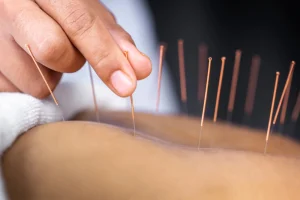
Needle insertion feels like a slight pinch, brief pressure, or sometimes nothing at all, because acupuncture needles are incredibly thin—about 0.2mm in diameter compared to 0.7-1.2mm for injection needles—and once needles are in place, most people don’t feel them unless they move suddenly, though you may notice sensations like tingling, warmth, or a dull ache that indicate the point is being effectively stimulated. The experience is far less painful than most people expect.
Dr. Swanson starts by cleaning the needle sites with alcohol. The needles come in sterile, single-use packages that he opens right before insertion. You’ll see him open each package fresh—they’re never reused.
The first needle going in creates the most anxiety because you don’t know what to expect. Most patients are surprised by how little they feel. Some points you won’t feel at all. Others create a quick pinch that lasts a split second. It’s nothing like the sustained pain of a vaccination or blood draw.
He’ll place anywhere from 6 to 20 needles depending on what he’s treating. Common points include locations on your lower legs, forearms, hands, feet, back, and sometimes your abdomen or head. Each insertion takes just a second or two.
Once needles are in place, you might feel various sensations. A dull ache, heaviness, warmth, tingling, or a sensation the Chinese call “de qi”—the feeling that something is happening at the point. These sensations are actually good signs that the treatment is working. They’re not painful; they’re just noticeable.
If any needle hurts more than a brief pinch, tell Dr. Swanson. He can adjust the depth or angle, or remove and reinsert it. Acupuncture shouldn’t be a painful experience. Some discomfort is normal, but nothing should hurt enough to make you tense up.
What Do You Do While the Needles Are In?
While the needles are in, you simply rest quietly on a comfortable treatment table for 15-30 minutes, during which time you can meditate, think, listen to soft music playing in the room, or often fall asleep as many patients do because acupuncture triggers deep relaxation in your nervous system. This rest period is when the therapeutic effects happen as your body responds to the needle stimulation.
The treatment room is usually dimmed with soft lighting. Some practitioners play calming music. The environment is designed to help you relax rather than creating the clinical feel of a medical office.
Dr. Swanson leaves the room during your rest period but checks on you midway through treatment. You’re not left alone for long periods wondering what’s happening. If you need anything or a needle becomes uncomfortable, you can call out or there’s usually a bell within reach.
Many patients report feeling deeply relaxed within minutes of needles being placed. Your muscles soften. Your breathing slows. Your mind quiets. This parasympathetic nervous system activation—the “rest and digest” mode—is part of why acupuncture helps with stress and anxiety.
Some people fall into a light sleep. Others enter a meditative state between waking and sleeping. A few stay fully alert, thinking through their day. All responses are fine. There’s no right or wrong way to experience the rest period.
You might notice sensations changing during treatment. A point that felt warm might start tingling. An ache might move or dissipate. These shifting sensations indicate your body is responding to treatment. Your energy—what Chinese Medicine calls Qi—is moving and rebalancing.
Does Needle Removal Hurt?
Needle removal doesn’t hurt at all—most patients don’t even feel the needles coming out because Dr. Swanson removes them quickly and smoothly in seconds, disposing of all used needles immediately in a medical sharps container, and you’re often so relaxed by this point that you barely notice the removal process happening. The whole thing takes less than a minute.
When your rest period ends, Dr. Swanson returns and removes needles one by one. Some practitioners remove them all rapidly in sequence. Others take a bit more time. Either way, removal is painless.
You might see tiny drops of blood at one or two needle sites. This is completely normal and means a needle happened to cross a tiny capillary. Dr. Swanson will apply pressure with a cotton ball for a few seconds and it stops. Small bruises can develop occasionally but are uncommon and fade quickly.
After all needles are out, you’ll lie still for another minute before slowly sitting up. This gradual transition helps prevent any lightheadedness. Some people feel slightly spacey or deeply relaxed after treatment—giving yourself a moment to adjust before standing prevents any dizziness.
How Will You Feel After Your First Treatment?
After your first treatment, you’ll likely feel deeply relaxed and calm, though some people experience temporary tiredness, slight soreness at needle sites, increased thirst, or emotional release, and while some patients notice immediate symptom improvement, most experience gradual benefits that build over multiple sessions as your body’s healing processes activate. Everyone responds differently to their first acupuncture session.
The deep relaxation often persists for hours after treatment. Many patients describe feeling “blissed out” or “floating” for the rest of the day. This is your nervous system shifting into healing mode. Enjoy it. Plan something gentle for after your appointment rather than rushing back into stressful activities.
Some people feel energized and clear-headed. Others feel sleepy and want to rest. Both responses are normal. Listen to your body. If you need a nap, take one. If you feel energized, that’s fine too.
Increased thirst after acupuncture is common. Your body is processing the treatment and clearing metabolic waste. Drink extra water for the rest of the day. This supports the detoxification process acupuncture stimulates.
Emotional releases sometimes happen. Patients might feel tearful or more emotionally sensitive after treatment. Traditional Chinese Medicine recognizes that emotions and physical health are deeply connected. Releasing stuck emotions is part of healing for many people.
Don’t expect instant pain relief, though it happens for some people. More commonly, symptoms improve gradually over several treatments as your body’s healing mechanisms activate. The first session starts the process. Subsequent treatments build on it.
What Should You Avoid After Acupuncture Treatment?
After acupuncture treatment, you should avoid intense exercise for the rest of the day, skip alcohol which can interfere with your body’s response to treatment, drink plenty of water to support detoxification, avoid stressful situations if possible to let the relaxation benefits persist, and don’t be alarmed by temporary symptom changes as your body rebalances. Give your body space to integrate the treatment.
Vigorous exercise right after acupuncture works against the treatment. Your body needs energy to heal, not to power through a CrossFit session. Light walking is fine. A gentle yoga class might be okay. But save the intense training for tomorrow.
Alcohol interferes with how your body processes treatment. If you’ve just invested time and money in acupuncture, don’t undermine it by drinking that evening. Wait at least 24 hours after treatment before having alcohol.
Hydration supports the healing processes acupuncture triggers. Your body is clearing inflammation, processing metabolic waste, and repairing tissues. Water helps all these processes work efficiently. Aim for extra water throughout the day following treatment.
Some patients experience temporary symptom worsening before improvement—a healing crisis. Your pain might increase slightly for a day. You might feel more tired. This is actually a sign your body is responding. It typically passes quickly and is followed by improvement.
When Will You Notice Results from Acupuncture Treatment?
You’ll notice results from acupuncture treatment anywhere from immediately after your first session to gradually over 3-6 weekly treatments depending on your condition, with acute problems often responding faster than chronic issues you’ve had for months or years, and most patients experiencing the most significant improvements when they commit to a complete treatment series rather than stopping after just one or two sessions. Consistency matters more than any single treatment.
Some lucky people walk out of their first session feeling dramatically better. Their migraine is gone. Their shoulder moves freely. Their anxiety lifted. This immediate response is wonderful but not the typical experience.
Most people notice subtle changes after the first few treatments. Pain isn’t gone but it’s less intense. You slept better last night. Your digestion seems calmer. These small improvements indicate your body is responding. They build cumulatively over subsequent sessions.
Chronic conditions require patience. If you’ve had lower back pain for five years, it won’t disappear after one acupuncture session. But over 6-8 weekly treatments, most patients with chronic pain experience significant improvement. The key is completing the recommended treatment series.
Dr. Swanson reassesses your progress regularly and adjusts the treatment plan based on how you’re responding. If you’re not improving after several sessions, he’ll modify his approach or recommend additional treatments that might help.
How Do You Schedule Your First Acupuncture Treatment?
You schedule your first acupuncture treatment by calling 512-452-2525 to speak with the office staff who will ask basic questions about your health concerns, check available appointment times, verify your insurance coverage if applicable, and book you for an initial consultation that includes both assessment and your first treatment session. The process is simple and the staff answers any questions you have about what to expect.
When you call, be ready to briefly explain what brought you to consider acupuncture. Chronic pain? Stress and anxiety? Sleep problems? Digestive issues? This helps the staff book adequate time for your first appointment and ensures Dr. Swanson has the information he needs.
First appointments typically last 60-75 minutes including consultation, assessment, and treatment. Follow-up sessions are shorter, usually 45 minutes. The office books appointments with enough buffer time that you never feel rushed.
Most insurance plans cover acupuncture for certain conditions like chronic pain. The staff at Austin Chiropractic & Acupuncture will verify your coverage before your appointment so you know what to expect financially. If insurance doesn’t cover it or you don’t have coverage, they offer affordable cash rates and payment plans.
Don’t wait until your pain becomes unbearable or your stress spirals out of control. The sooner you try acupuncture, the faster your body can start healing. Most people wish they’d tried it years earlier instead of suffering needlessly.
Your first acupuncture treatment might feel intimidating now, but within minutes of lying on the treatment table with needles placed, most patients understand what people mean when they say acupuncture is deeply relaxing. The needles don’t hurt. The experience feels therapeutic, not scary. And the results—reduced pain, better sleep, less stress, improved function—make it worth any initial nervousness.
Call 512-452-2525 today and schedule your first session. Your body has been trying to tell you it needs help. Acupuncture might be exactly what it needs to finally heal.