
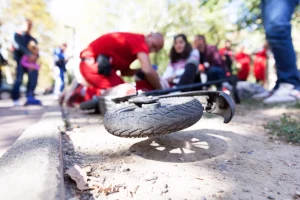
 Austin’s streets are full of Lime and Bird scooters, and rideshare pickups outside every bar on Rainey Street and every venue downtown. It’s one of the things that makes getting around the city so easy — until it isn’t. If you’ve been hurt in a crash involving an e-scooter, an Uber, or a Lyft, the recovery path looks a little different than a typical car accident, and it deserves its own game plan. As part of our broader auto accident and personal injury chiropractic care here in Austin, Dr. Justin Swanson, D.C., FASA, C.C.E.P. of Austin Chiropractic & Acupuncture treats patients recovering from scooter falls, rideshare collisions, and everything in between. Here’s what to do, and why a scooter accident chiropractor in Austin should be part of your recovery plan.
Why E-Scooter and Rideshare Accidents Are a Growing Austin Problem
Austin has one of the busiest e-scooter markets in the country, with thousands of Lime and Bird scooters scattered across downtown, the University of Texas campus, South Congress, and the Domain. Add in the sheer volume of Uber and Lyft trips happening every weekend near Rainey Street, the Warehouse District, and Sixth Street, and you’ve got a recipe for a very specific type of injury pattern — one that’s different from the rear-end collisions most people picture when they think “car accident.”
Scooter riders have almost no protection. There’s no seatbelt, no airbag, no metal frame absorbing the impact — just a rider, a curb, a pothole, or an inattentive driver. Rideshare passengers, meanwhile, are often riding in unfamiliar vehicles with drivers they’ve just met, which means less predictable braking, lane changes, and following distance. Both scenarios send a steady stream of patients through the doors of chiropractors and urgent care clinics across the city every month.
Common Injuries We Treat After Scooter and Rideshare Accidents
Every scooter accident chiropractor in Austin sees a fairly consistent pattern of injuries, though the mechanism differs from a traditional two-car collision:
- Wrist and shoulder injuries — the instinct to brace with your hands during a scooter fall puts enormous stress on the wrists, elbows, and shoulders
- Whiplash and neck strain — common in rideshare accidents where a passenger’s body is thrown forward or sideways without warning
- Lower back and pelvic pain — from hard landings on pavement or curbs after a scooter fall
- Knee and ankle sprains — frequently seen when a scooter wheel catches a pothole or streetcar track
- Road rash combined with soft tissue injury — the visible scrapes often distract from the deeper muscular and spinal injuries underneath
- Headaches and dizziness — a signal that deserves prompt evaluation after any fall or collision
Because scooter riders typically aren’t wearing helmets and rideshare passengers rarely expect a sudden jolt, these accidents often produce injuries that feel minor in the first hour and worsen significantly over the following days.
Step 1: Get Checked Out, Even If You Feel “Fine”
Adrenaline is a powerful painkiller. Many patients who fall off a scooter near Barton Creek or get jolted in a rideshare on Mopac walk away feeling shaken but not seriously hurt, only to wake up the next morning barely able to turn their neck. A same-day or next-day evaluation from an experienced Austin accident chiropractor establishes a clear baseline and catches soft tissue damage before it becomes a chronic problem.
Step 2: Document Everything on the Spot
If you’re able, take photos of the scooter, the road surface, any vehicle involved, and your visible injuries. Get the rideshare driver’s information and trip receipt, or the scooter’s ID number if it’s a Lime or Bird. This documentation matters just as much for a scooter or rideshare claim as it does for a standard car accident, especially since liability can involve the rider, the driver, the rideshare company, or the scooter company itself.
Step 3: Start Chiropractic Care Within the First Few Days
Waiting weeks to address pain from a scooter accident allows inflammation and muscle guarding to set in, which makes treatment take longer and recovery less complete. Dr. Swanson’s approach combines chiropractic spinal and extremity adjustments, acupuncture, and SoftWave Therapy when appropriate — addressing the wrist and shoulder trauma common in scooter falls alongside the whiplash-type injuries more typical of rideshare collisions.
Step 4: Let Your Documentation Support Your Claim
Whether you’re filing a claim against a rideshare company’s insurance, a scooter company, or an at-fault driver, thorough chiropractic records make a real difference. Our office provides detailed exam findings, treatment notes, and progress documentation that insurance adjusters and, if needed, attorneys can use to support your case. This is one of the areas where working with an experienced Austin chiropractor for scooter and rideshare accident recovery pays off — your records tell the full story of how the accident affected your body.
Step 5: Follow a Complete Recovery Plan, Not Just a Few Visits
Scooter and rideshare injuries often involve a mix of joint, muscle, and nerve trauma that doesn’t resolve with a single adjustment. Dr. Swanson builds a customized treatment plan — often layering chiropractic adjustments with rehabilitative exercises and, where indicated, SoftWave Therapy for soft tissue regeneration — so your body heals completely instead of just quieting down the pain temporarily.
Why Austin Patients Trust Dr. Swanson After a Scooter or Rideshare Accident
Dr. Justin Swanson has been serving Austin, Northwest Hills, Allandale, Rosedale, and Tarrytown since 2009. He’s a Palmer College of Chiropractic Dean’s List graduate, holds a fellowship (FASA) earned under Dr. Richard Yennie — the 1998 World Health Organization “Man of the Year” — and is a Certified Chiropractic Extremity Practitioner (C.C.E.P.), a credential that matters enormously for scooter accident patients dealing with wrist, shoulder, knee, and ankle trauma alongside spinal injuries.
He also serves as the Official Chiropractor of the Texas Stars Hockey Team, bringing the same clinical urgency used for professional athletes to every rideshare and scooter accident patient who walks through the door. With 400+ five-star reviews and a 92% patient satisfaction rate, plus on-site digital X-rays for same-day diagnostic clarity, patients throughout Round Rock, Bee Cave, Georgetown, and Lakeway trust his drug-free, surgery-free approach to accident recovery. Dr. Swanson is also part of the world’s largest chiropractic family, with 44 Doctors of Chiropractic across his extended family — a tradition of care that shows up in the thoroughness of every exam.
Frequently Asked Questions About Scooter and Rideshare Accident Chiropractic Care
1. Do I need to see a chiropractor after a minor scooter fall?
Yes. Even a low-speed scooter fall can strain the wrists, shoulders, and spine in ways that aren’t obvious right away. A prompt evaluation from a scooter accident chiropractor in Austin catches soft tissue injuries before they become chronic pain.
2. Who is liable for an e-scooter accident in Austin?
Liability can fall on the scooter rider, another driver, the road authority, or the scooter company, depending on the circumstances. Thorough documentation from your first chiropractic visit strengthens whichever claim ultimately applies.
3. How is a rideshare accident injury different from a regular car accident injury?
Rideshare passengers often experience unexpected jolts, sudden braking, or lane changes without the same anticipation a driver has, which can lead to whiplash and soft tissue strain even in low-speed incidents.
4. What if my pain doesn’t start until a day or two after the accident?
This is extremely common with both scooter falls and rideshare accidents. Adrenaline masks pain immediately after impact. If you notice stiffness, headaches, or soreness in the days following, schedule an evaluation right away.
5. Does chiropractic care help with wrist and shoulder injuries from scooter falls?
Yes. Dr. Swanson’s C.C.E.P. certification means he’s specifically trained in extremity adjusting — treating shoulder, wrist, elbow, hip, knee, and ankle injuries, not just spinal trauma, which is common with scooter accidents.
6. Will my insurance or a rideshare company’s insurance cover chiropractic treatment?
Coverage depends on the specifics of your accident and policy. Our office helps patients understand documentation requirements and works with the records insurance companies and attorneys typically need to see.
7. How soon after a scooter or rideshare accident should I schedule an appointment?
As soon as possible — ideally within 24 to 48 hours. Early evaluation establishes a clear injury baseline, supports any insurance claim, and helps prevent minor strains from becoming long-term problems.
Schedule Your Scooter or Rideshare Accident Evaluation Today
If you’ve been hurt in an e-scooter fall or a rideshare accident anywhere in Austin, Northwest Hills, Allandale, Rosedale, Tarrytown, Round Rock, Bee Cave, Georgetown, or Lakeway, don’t wait for the pain to get worse. Call Austin Chiropractic & Acupuncture today at (512) 452-2525 to schedule your evaluation with Dr. Justin Swanson.
Austin Chiropractic & Acupuncture
5750 Balcones Dr Suite 108, Austin, TX 78731
Phone: (512) 452-2525
Office Hours
Monday: 9 to 1 & 3 to 6
Tuesday: 9 to 1 & 3 to 6
Wednesday: 9 to 1 & 3 to 6
Thursday: 9 to 1
Friday: Closed